

NERO Day is an annual pre-conference event dedicated to bringing together the New and Emerging Researchers of OCIES. More than a gathering, NERO is a collective—an intentionally cultivated community and relational space designed to uplift, empower, and connect emerging scholars across Oceania.
At its heart, NERO aims to create a safe, encouraging, and intellectually vibrant environment where emerging researchers can share their work, learn from one another and from senior scholars, build networks that will sustain them throughout their research journeys, and engage with the ethical, cultural, and political responsibilities of researching in and with Oceania.
One of the highlights of NERO Day is the opportunity to engage closely with Senior OCIES scholars who offer grounded advice and deep reflections on navigating academia and the global research landscape. The 2025 panel featured a remarkable group of leaders whose careers span Oceania and the world of higher education, including:
- Emeritus Professor Carol Mutch – University of Auckland
- Professor Cheryl Brown – University of Canterbury
- Leua Latai – National University of Samoa
- Emeritus Professor Michael Peters
- Dr Tanya Wendt Samu – University of Auckland
- Associate Professor Alexandra McCormick – University of Sydney
- Dr Sonia Fonua – University of Auckland
- Dr Sofia Ali – Fiji National University
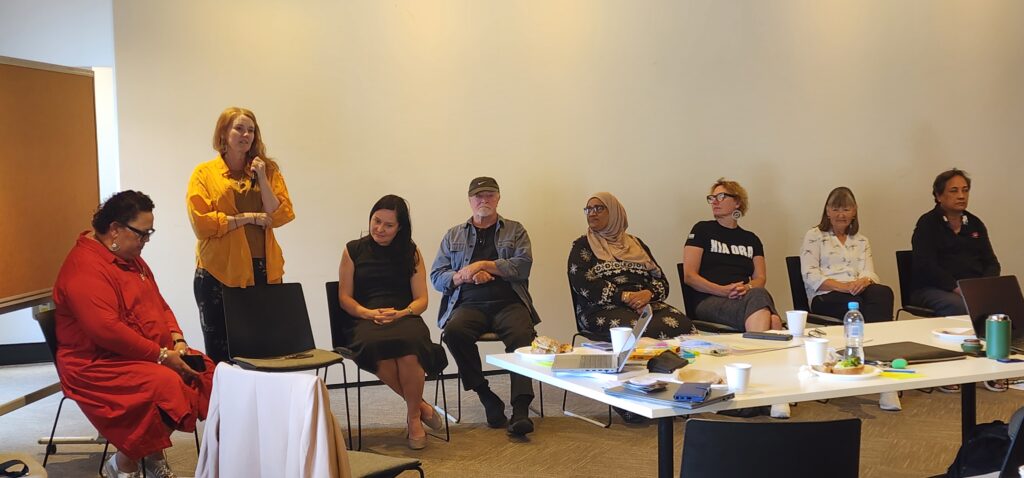
Together, they offered a tapestry of wisdom that blended humour, honesty, and deep relational insight—wisdom rooted firmly in the lived realities of scholarly life in Oceania.
A central thread running through their talanoa was the relationship between passion and community. As one scholar observed, “Passion is powerful, but it’s community that sustains it.” Scholarship in Oceania, they reminded us, is always a collective endeavour: “In our region, no one journeys alone—our collective keeps the fire burning.”
Mentoring was discussed not simply as an academic transaction but as a relational practice that begins long before university. “Your first mentors are often in your own family—parents, grandparents—long before you enter academia,” one panelist reflected. Emerging researchers were encouraged to seek mentors who “recognise your spark and help you shape it,” reminding us that mentorship is reciprocal, relational, and lifelong.
The scholars spoke candidly about the need for adaptability in an ever-changing academic landscape. “Education is a lifelong voyage,” one shared, “and age is never a barrier—there is always something more to discover.” This openness to growth was paired with honest reflections on institutional pressures. Academia, they noted, can often feel like a game dominated by metrics, performance indicators, and publication demands. “We may be forced to play the game at times,” one scholar said, “but we can still play it ethically and remain true to our values.”
This integrity, they emphasised, relies on the people around us—“Scholarship is sustained by people, not performance indicators.”
Work–life balance emerged as a strong point of concern. Panelists encouraged emerging researchers to protect their humanity in systems that constantly ask for more. “Hold on to your humanity. Make time to live,” they urged. “Work–life balance isn’t a luxury; it’s a requirement for sustaining your scholarship.” They acknowledged the need to push back when expectations become excessive, and to discern which opportunities genuinely align with one’s purpose. “Don’t take every opportunity,” one warned. “Take the ones aligned with who you want to become.” At the same time, they encouraged remaining open to the unexpected—“serendipitous moments that can fuel your best work.”
A deeply Pacific orientation to research—grounded in identity, relationality, and care—shaped much of the discussion. “Your research is not separate from who you are—scholarship is a way of being,” one senior scholar reminded the group. Self-care was framed not as indulgent but as methodological: “Care for yourself as a scholar. Care is not optional; it is foundational.” Setting boundaries and declaring aspirations openly were described as acts of self-respect necessary for navigating the demands of academic life.
The panelists also urged emerging scholars to nurture the areas of scholarship they genuinely love. “Don’t put what you love on the back burner—incorporate it into your work,” they advised, noting that many of the most transformative insights come from outside the academy.
Reflecting on the broader responsibilities of scholars in Oceania, the panel underscored the role of academic freedom and the courage required to speak with integrity. “Cherish your role as critic and conscience,” one said. “It is a privilege and a responsibility.” They cautioned against equating value with neoliberal notions of ‘impact,’ instead reframing influence as relational: “Your influence begins with your students. From there, it branches out and grows.”
Finally, they called emerging researchers back to the heart of Pacific scholarship: connection. “Methodologies are about relationships—how we connect, how we listen, how we honour one another,” a scholar reflected. They encouraged researchers to partner with communities, work ethically with schools, and use academic knowledge for good. “Be brave,” one urged. “Have the courage to speak against the grain.”
The Senior Scholars Panel offered not just advice but a relational, purposeful, and deeply human orientation to scholarly life—one grounded in the values of Oceania. For many emerging researchers in the room, it was a moment of affirmation, challenge, and encouragement, and a reminder that the journey ahead is both demanding and richly rewarding, especially when taken together.
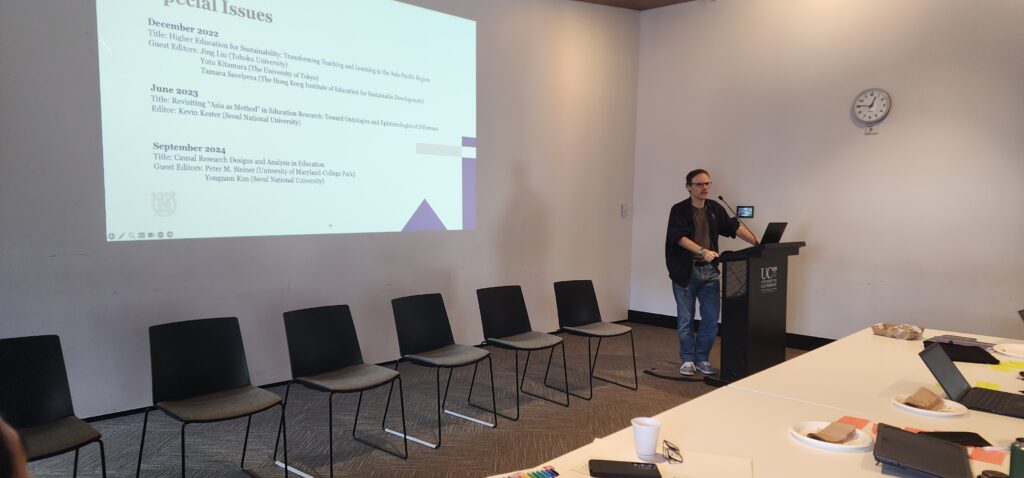
Kevin Kester, an Associate Professor of Comparative International Education and Peace/Development Studies at Seoul National University presented on publishing opportunities as an Editor for the Asia Pacific Education Review Journal.
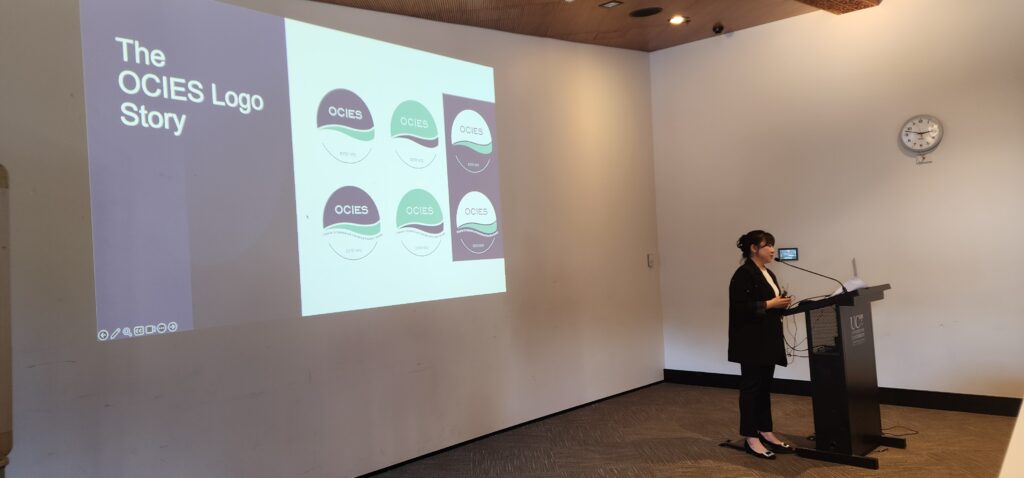
Yaqing Hou from Monash University presenting on her design work for the new OCIES logo.

NERO members engaged in Talanoa.
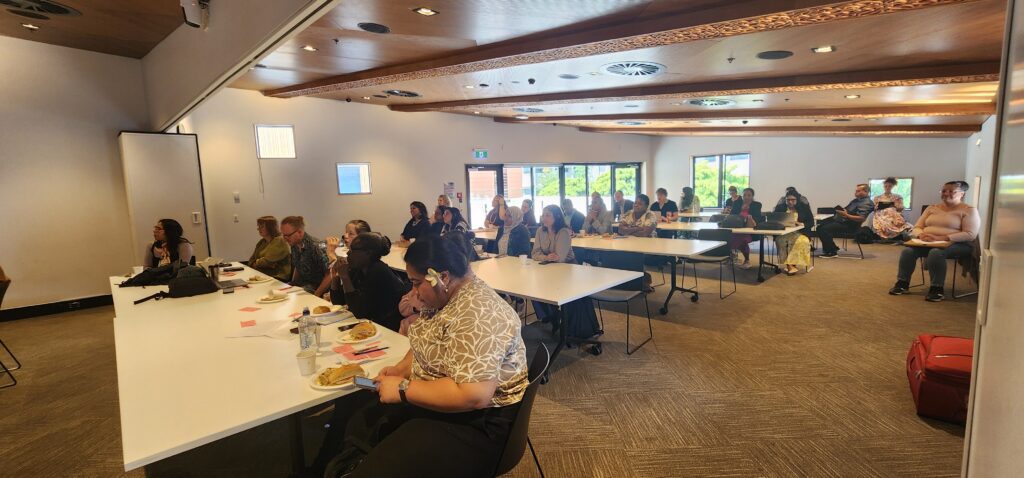
NERO day participants
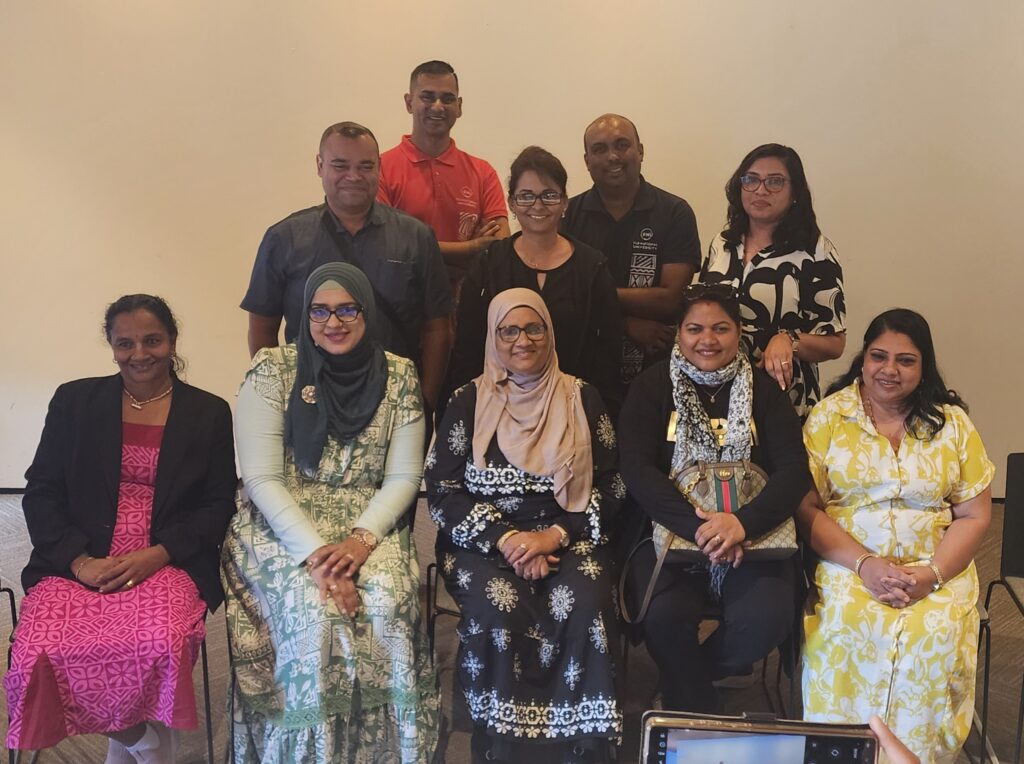
NERO day contingent from Fiji.