
The 53rd Annual Oceania Comparative and International Education Society (OCIES) Conference, held at Te Whare Wānanga o Waitaha | University of Canterbury, brought together scholars, educators, policymakers, and emerging researchers from across Oceania and beyond. Centred on the theme ‘Education, Knowledge, and Power in the Asia-Pacific’, the conference illuminated the shifting currents shaping Comparative and International Education (CIE) in our region. Across four days, keynote provocations, paper presentations, roundtables, and Talanoa circles explored how knowledge production, educational futures, and the politics of power unfold across diverse Pacific and Asia-Pacific contexts.
Keynote highlights: Rethinking power, knowledge and future
This year’s keynote speakers offered critical anchors for the conference’s intellectual direction.
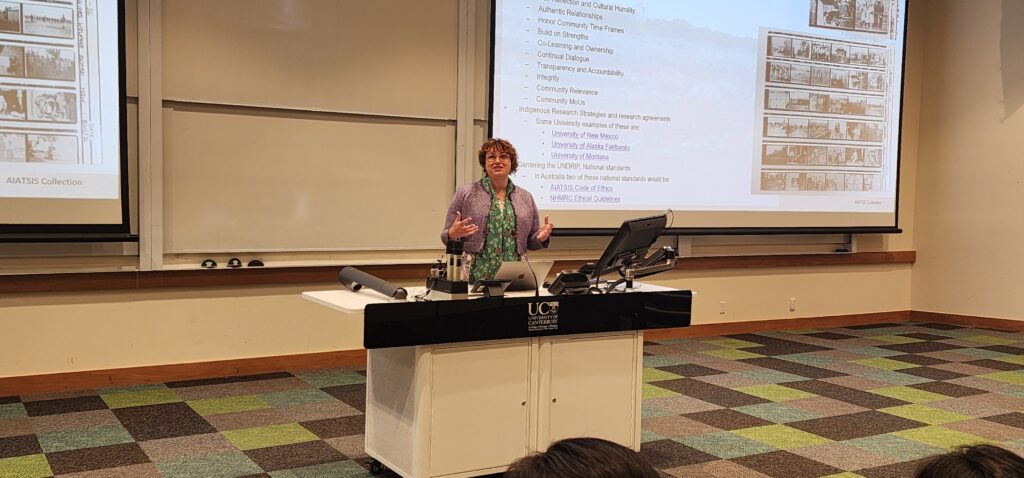
Associate Professor Sadie Heckenberg opened with a powerful call to centre Indigenous knowledges, cultural safety, and self-determination within the academy. Her articulation of Yindyamarra (Wiradjuri ways of being, knowing, and doing) framed Indigenous methodologies not only as scholarly contributions but also as relational, ethical, and transformative practices that shape the future of education.
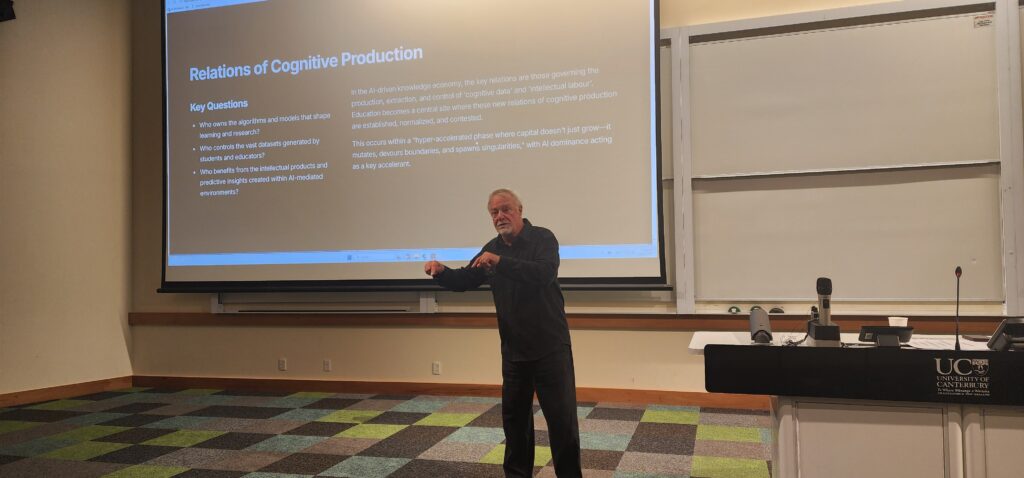
Emeritus Professor Michael A. Peters drew attention to the geopolitics of AI, positing artificial intelligence as a new “general condition of cognition” that shapes educational development. His discussion of competing global “twin systems”—the US-led, closed, proprietary AI ecosystem versus the China-aligned, open-source model—raised urgent questions about digital sovereignty, surveillance, and equity in the Asia-Pacific.
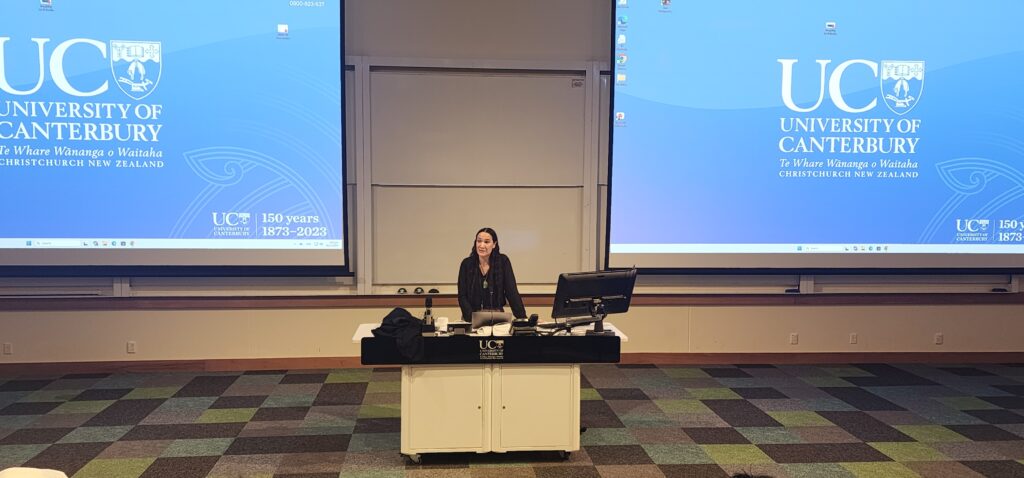
Juanita Hepi offered a sweeping reflection on storytelling, imagination, and resistance. Her keynote asserted that when education reduces stories to measurable commodities, it undermines their power to unsettle, connect, and liberate. Stories, she argued, remain a radical tool for strengthening Indigenous leadership and nurturing collective futures.
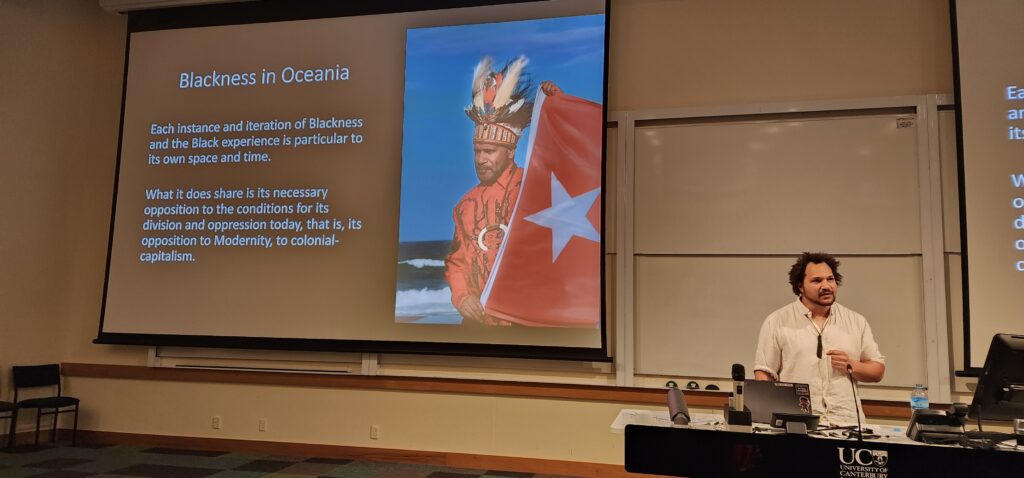
Dr Nathan Rew closed the conference with a provocation grounded in Epeli Hauʻofa’s legacy. He asked how educators might teach “Oceanian futures in the end times,” urging a pedagogy that both critiques collapsing colonial-capitalist systems and cultivates Indigenous forms of world-building anchored in kinship, water, and relationality.
Conference themes and research directions across Oceania
The presentations revealed several strong thematic threads shaping research across our region.
1. Decolonising Education and Centring Indigenous Knowledge
Many papers engaged deeply with Indigenous methodologies, including Kaupapa Māori, Talanoa, Kakala, Tivaevae, and the newly articulated Kokonas Methodology from Vanuatu. Presenters emphasised cultural sovereignty, reciprocal relationality, and community-driven research. A significant cluster of papers explored “By Pacific for Pacific” research, Indigenous youth responses to environmental and cultural metacrisis, and the importance of relational ethics in educational research. These developments signal a continued disciplinary shift: Indigenous thought is not adjacent to CIE in Oceania—it is foundational.
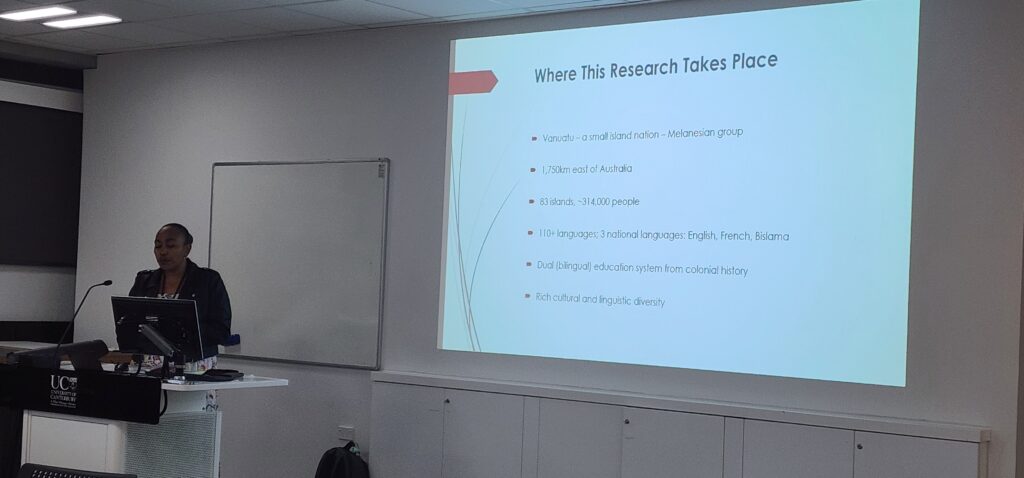
Angelinah Eldads Vira presenting her Kokonas Research Methodology, the first research
framework developed in and for Vanuatu. Rooted in Vanuatu’s indigenous knowledge systems, ‘kokonas’ (Bislama for coconut) symbolises growth, connection, and cultural strength.
2. Educational Equity, Inclusion, and Pacific Learner Success
Presentations addressing inclusive education in Samoa, culturally sustaining pedagogies, and frameworks like Tapasā demonstrated ongoing regional commitments to equity and social justice. Papers highlighted the need for Indigenous and Pacific-centred approaches to teacher development, policy design, and community partnerships.
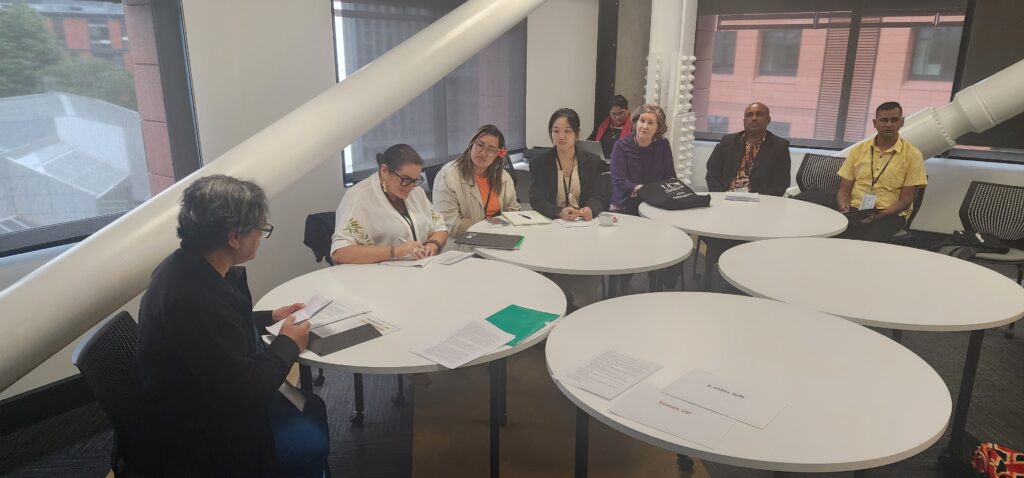
Leua Latai from the National University of Samoa, during her Conversation Circle ‘Upu tu’u gutu, upu tu’u taliga: Decolonising educational support through Samoan epistemologies of oke, where an extended theorisation of oke as a distinctive Samoan pedagogical and philosophical method of guidance, as an Indigenous response to contemporary challenges in higher education, was presented.
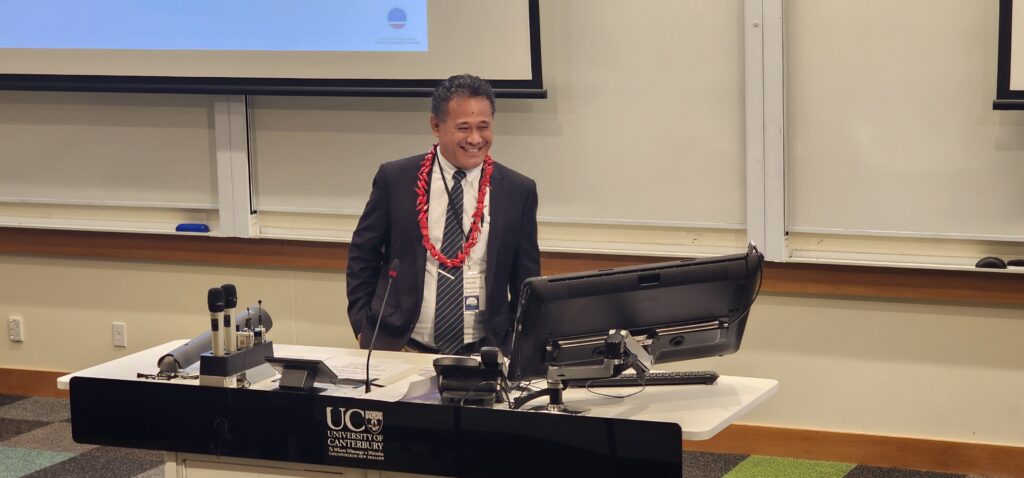
Tofilau Faguele Suaalii from the National University of Samoa presenting on
‘Faitatala as a teaching tool in Science: Contextualizing the teaching of science in Samoa’. International literature states that the emphasis of science education should be on inquiry learning, where students are encouraged to construct meaningful understanding of scientific concepts through the use of contextualised instructional strategies.
3. Sustainability, Metacrisis, and Human–Nature Kinship
Sustainability emerged as a defining concern. Scholars emphasised interdependence with the natural world, kinship ethics, and Indigenous ecological knowledge as critical pathways for confronting the metacrisis. These contributions demonstrate how CIE in Oceania uniquely positions itself within global sustainability debates—not as a peripheral voice, but as a source of epistemic leadership.
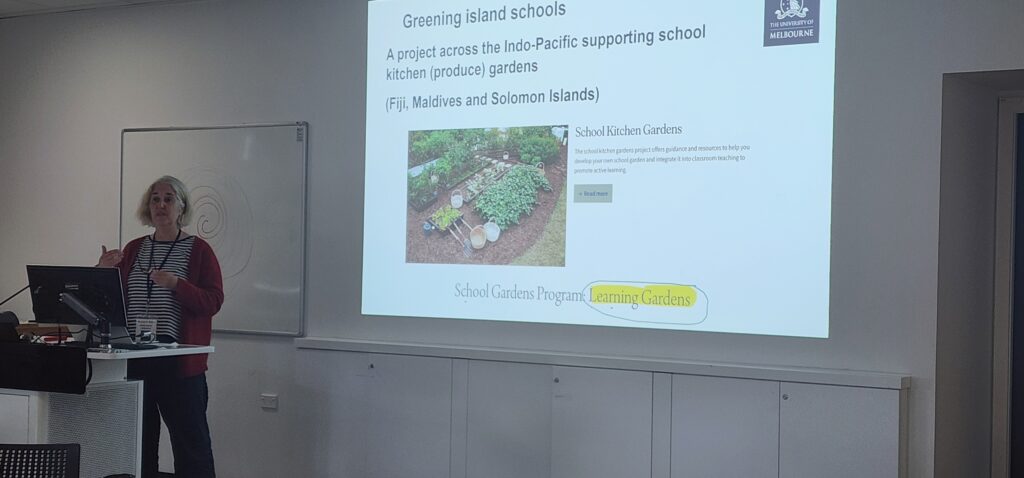
Dr Rhonda Di Biase presenting on ‘Promoting climate resilient school gardens across the Indo-pacific region’. This study investigated the implementation of school gardens in Fiji, the Solomon Islands and the Maldives, with the aim of promoting education for sustainability.
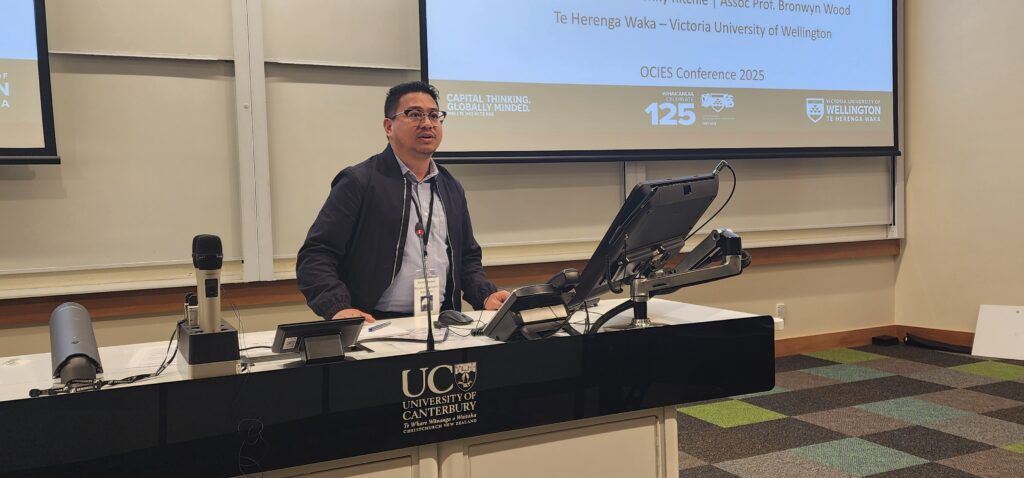
Dr Sanam Maskey presenting on ‘Ruptures in relationships: Implications of neoliberalism in education on Indigenous communities in Nepal. The people of Newar, an indigenous community in Nepal, have been practising their unique language, culture, and traditions for centuries. However, this rich knowledge is increasingly being impacted by the adoption of Eurocentric Western models of development as universal and the influence of neoliberalism in formal education.
4. Technology, AI Literacy, and Digital Futures
From AI translation tools and junior-primary AI literacy frameworks to Talanoa dialogues on reimagining assessment, technology-focused presentations explored tensions between innovation, equity, and cultural integrity. Scholars raised concerns about algorithmic bias, cultural homogenisation, and digital divides while offering creative, community-centred pathways for engaging AI responsibly.
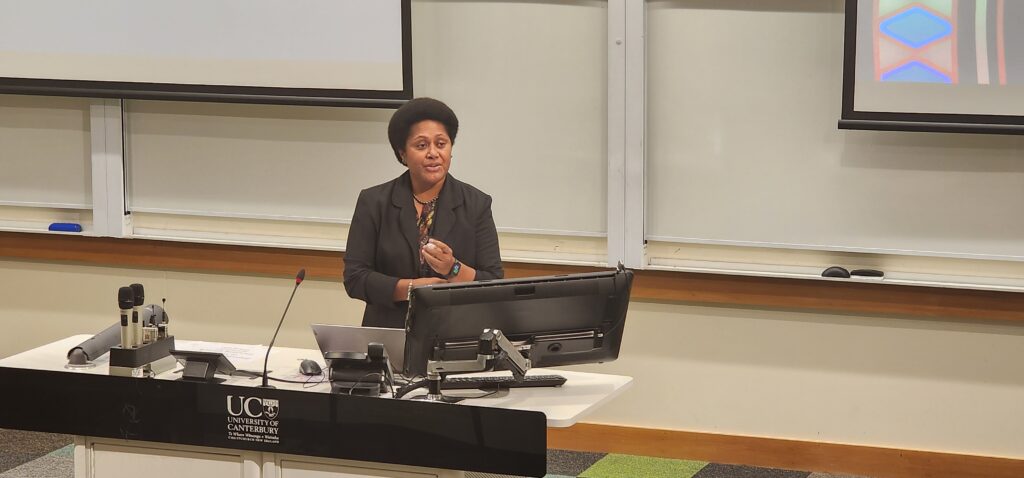
Dr Kasanita Nayasi presenting on ‘Echoes of Identity: The Watering Down of iTaukei Culture in the Age of AI’, which explores the evolving landscape of iTaukei cultural identity in the context of accelerating global change, focusing particularly on the role of artificial intelligence (AI). Her research examined how technological systems within Fiji itself are contributing to the
erosion of traditional practices, language, and identity.
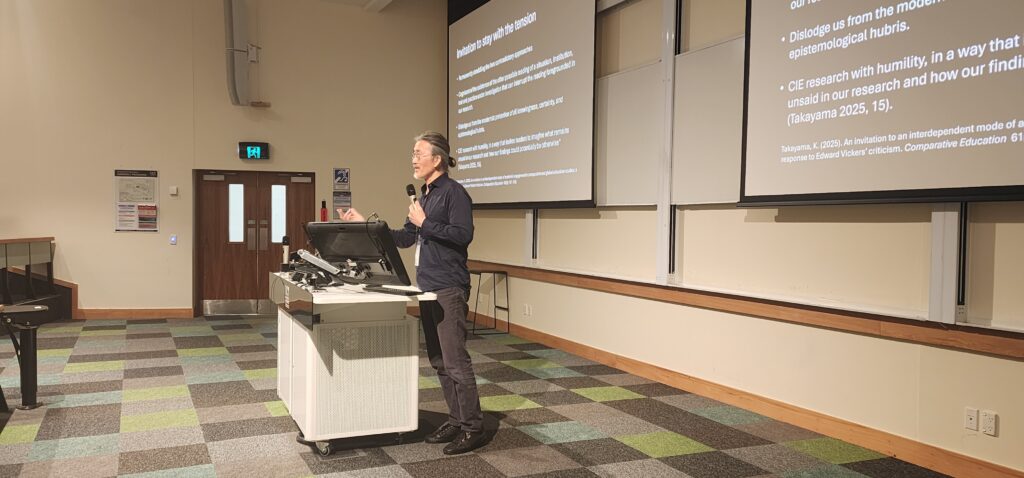
Professor Keita Takayama presenting ‘What is comparative education?: Staying with the contradiction between hermeneutics of suspicion and hermeneutics of faith’.
Implications for Comparative and International Education in Oceania
The 2025 OCIES Conference reflects a discipline in active transformation. Across sessions, several broader trends emerged:
A. Growing Confidence in Indigenous Epistemologies
Indigenous frameworks are not simply methodological options—they are shaping theory-building, research ethics, and pedagogical futures across Oceania. CIE in this region increasingly speaks back to the field with unique intellectual contributions.
B. Critical Geopolitics and Techno-Futures
The rise of AI and shifting power dynamics in the Asia-Pacific demand new kinds of comparative analysis. Scholars are mapping how international education intersects with digital infrastructures, surveillance, nationalism, and global economic competition.
C. Re-theorising Education in Times of Crisis
From climate catastrophe to political instability to cultural erosion, researchers are examining how education can be a site of survival, refusal, and regeneration. CIE in Oceania is becoming more future-oriented, ethically grounded, and relational.
D. Strengthening Regional Networks and Emerging Researchers
The NERO pre-conference workshop and numerous collaborative presentations highlight a vibrant pipeline of emerging scholars contributing new voices, new methodologies, and new aspirations for the region.
Looking forward
This year’s conference signals immense possibilities for the future of Comparative and International Education in Oceania. By foregrounding Indigenous knowledge, confronting global challenges with regional insight, and collectively imagining ethical futures, OCIES continues to cultivate a scholarly community capable of responding to—and reshaping—the complexities of our world.
The 53rd Annual Conference highlighted that in Oceania, education is not merely an academic field. It is a relational, political, and deeply cultural project—one that continues to grow in strength, creativity, and transformative potential.