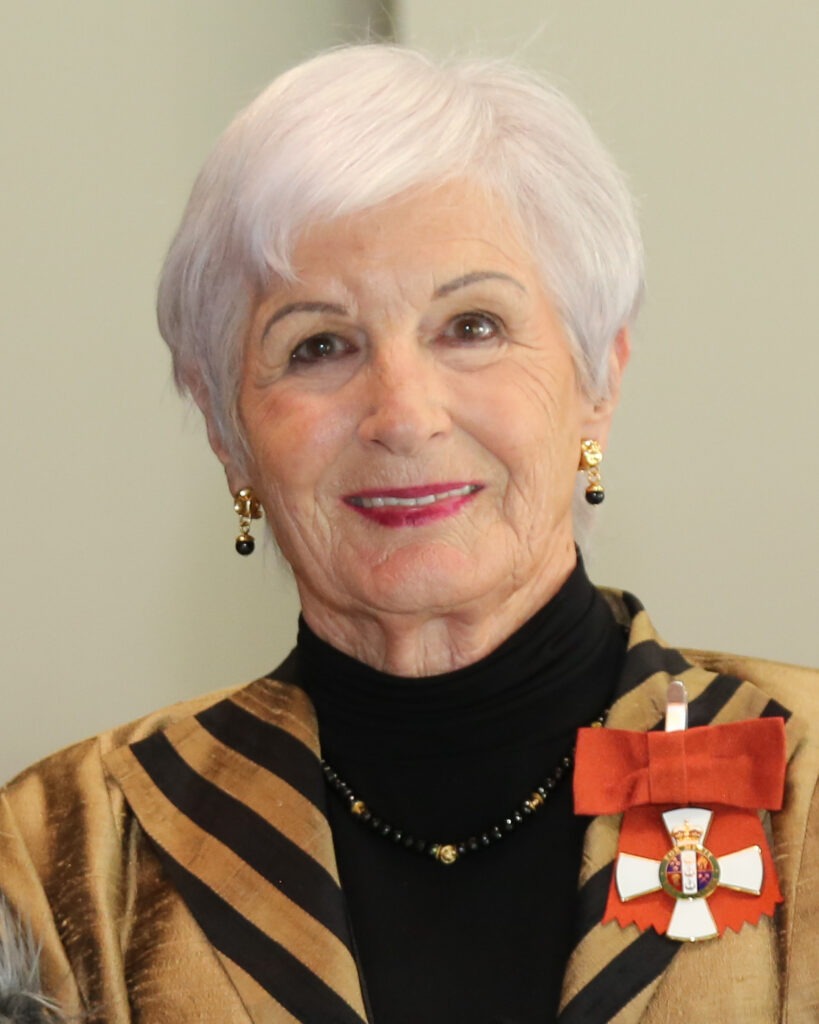
At the 53rd Oceania Comparative and International Education Society (OCIES) Conference hosted by the University of Canterbury, Associate Professor Evelyn Imelda Coxon CNZM reflected on the rich history of the Society and the important journey that transformed ANZCIES into OCIES.
Her reflections provided insight into how questions of inclusion, regional identity, and Indigenous and Pacific participation have shaped Comparative and International Education across Oceania over the past five decades.
The Society was first established in 1973 as the Australia Comparative Education Society (ACES), later becoming the Australian Comparative and International Education Society (ACIES). In 1983, following the Society’s first conference held in Aotearoa New Zealand at the University of Waikato, the organisation became ANZCIES — the Australia and New Zealand Comparative and International Education Society.
That same year, the Society joined the World Council of Comparative Education Societies (WCCES), becoming the only recognised regional Comparative and International Education society within Oceania.
By the late 1990s and early 2000s, however, deeper conversations were emerging about what it meant to be a genuinely regional society.
Members increasingly questioned whether the Society’s structure and identity reflected the diversity of Oceania itself, particularly given the field’s growing attention to colonialism, inequality, and Indigenous knowledge systems.
Pacific colleagues also raised concerns about a regional society whose name visibly centred Australia and New Zealand while excluding Pacific nations from its very nomenclature. As Eve reflected, there is a difference between being welcomed into a space and genuinely sharing ownership of it.
These conversations culminated in important discussions at the Society’s 2013 and 2014 Annual General Meetings about renaming ANZCIES to better reflect the region and the aspirations of the Society.
Central to these debates was the idea of “Oceania” itself.
Supporters of the change drew on the work of the late Tongan scholar Epeli Hauʻofa, whose influential concept of a “New Oceania” imagined the region as an interconnected relational space grounded in shared histories, movement, and Indigenous ways of knowing.
When members voted in favour of the change in 2014, the Oceania Comparative and International Education Society (OCIES) was formally born.
Importantly, the transition represented far more than a name change. It reflected an ongoing commitment to building a more inclusive, regionally grounded, and relational scholarly community across Oceania.
In 2015, the Society held its first conference outside Australia and Aotearoa New Zealand at the University of the South Pacific’s Emalus Campus in Vanuatu — an important milestone in the Society’s regional journey.
Reflecting on the decade since, Eve described a process of “deliberate revisioning” through which inclusiveness became “the relational core of OCIES.”
Today, many of these commitments are visible through the Society’s growing support for Pacific and Indigenous scholarship, emerging researchers, and collaborative regional dialogue.
As Eve’s reflections remind us, understanding the history of OCIES is also about understanding the ongoing work of imagining what Comparative and International Education in Oceania can continue to become.
Key Moments in OCIES History
- 1973 — Australia Comparative Education Society (ACES) established
- 1983 — Society becomes ANZCIES at the University of Waikato conference in Aotearoa New Zealand
- 1983 — ANZCIES joins the World Council of Comparative Education Societies (WCCES)
- 2013–2014 — Major consultations and debates about regional identity and renaming the Society
- 2014 — Members vote to become the Oceania Comparative and International Education Society (OCIES)
- 2015 — First OCIES conference held outside Australia and Aotearoa New Zealand at USP Emalus Campus, Vanuatu